
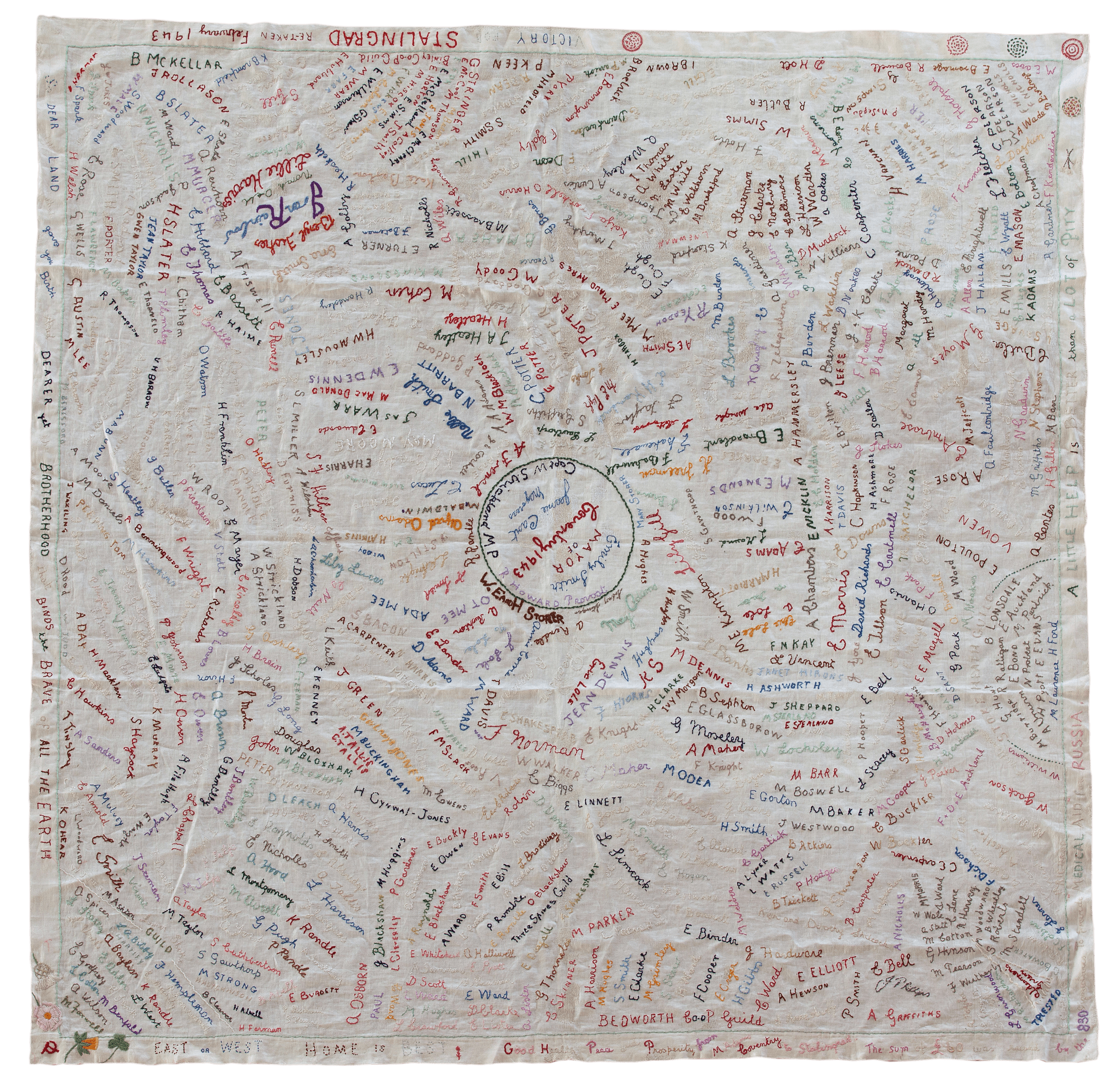
In January 1943, Emily Smith, the mayor of Coventry, 830 other women and several men wrote their names on a tablecloth. Each of them made a contribution of six pence for a signature to the Medical Aid to Stalingrad Fund. Over the next two years, May Adams, a resident of Coventry, embroidered these names on a tablecloth. Enid Trent (Meyel), an honorary secretary of Coventry Committee of English-Soviet Unity in 1941-1949 responsible for organization of numerous events, wrote, “To make a tablecloth for Stalingrad was the idea of Ms. May Adams, who was a representative of the English-Soviet Unity Committee from the women's guild of the Lockhorst Lane cooperative ... She began embroidering on the tablecloth in February 1943, when Stalingrad was released and took every opportunity to ask people to put their signatures on the tablecloth and make a monetary contribution to the Medical Aid to Soviet Union Fund”. The tablecloth was officially handed to the representatives of Stalingrad on March 31, 1947.
Tablecloth. A gift from women of English-Soviet committee of Coventry
 The United Kingdom ,
1943
The United Kingdom ,
1943
МЗСБ КП 3605 П 847
160 х 160 cm
linen, thread, weaving, embroidery
Tablecloth with 830 names of English women embroidered on it, who worked at the Coventry weaving factory and were active members of the English-Soviet Unity Committee who participated in raising funds for medical aid to Stalingrad. West Midlands country, Coventry
See also


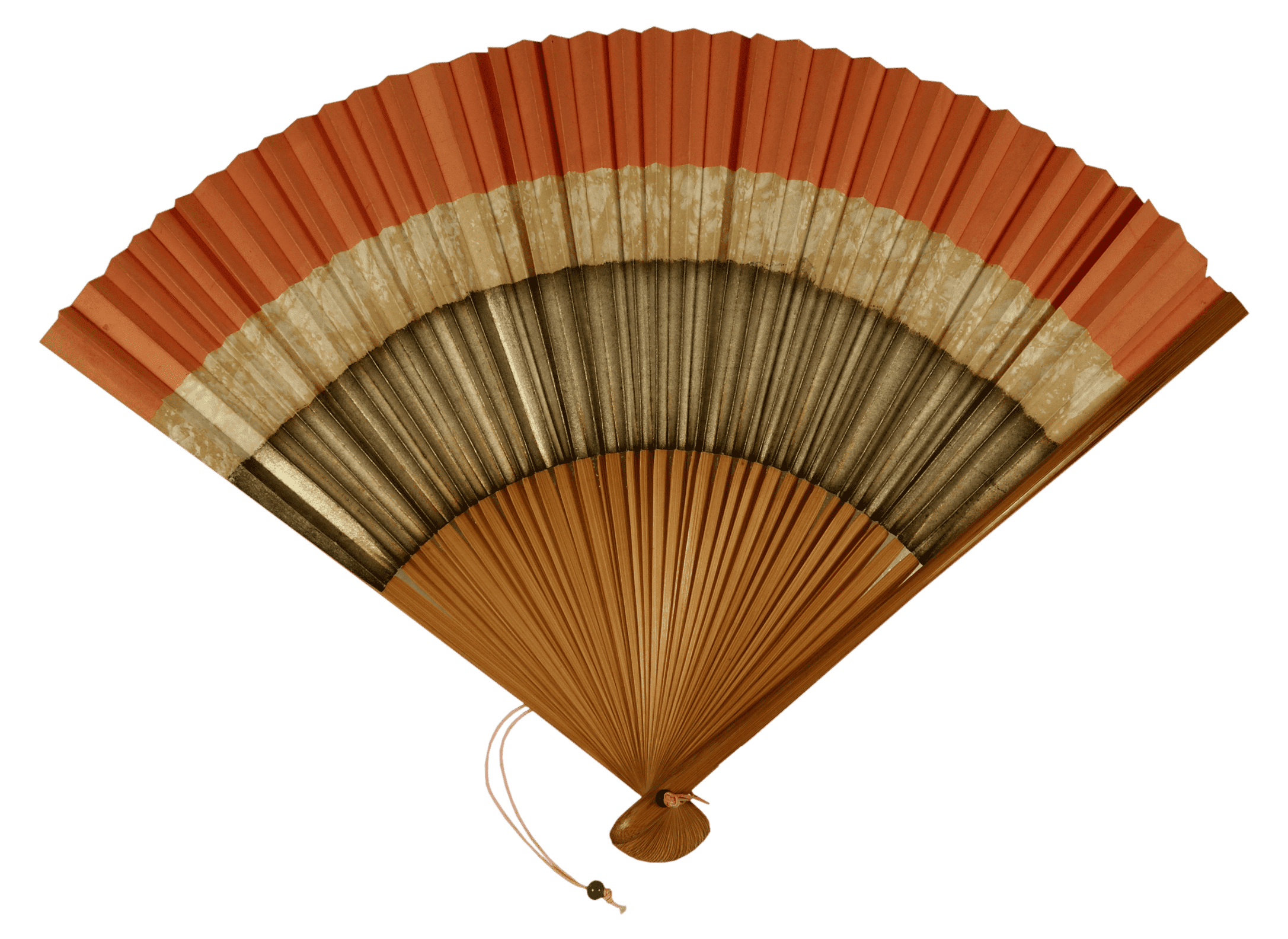
Hand fan. A gift from a participant in the World Congress of Mothers in Lausanne
 Japan ,
August, 1955
Japan ,
August, 1955
Hand fan. A gift from a participant in the World Congress of Mothers in Lausanne
Hand fan. A gift from a participant in the World Congress of Mothers in Lausanne who visited Stalingrad in August 1955. The Japanese fan is used not so much to create a cooling airflow but as an element in traditional ceremonies, dances and as a marker of social status.
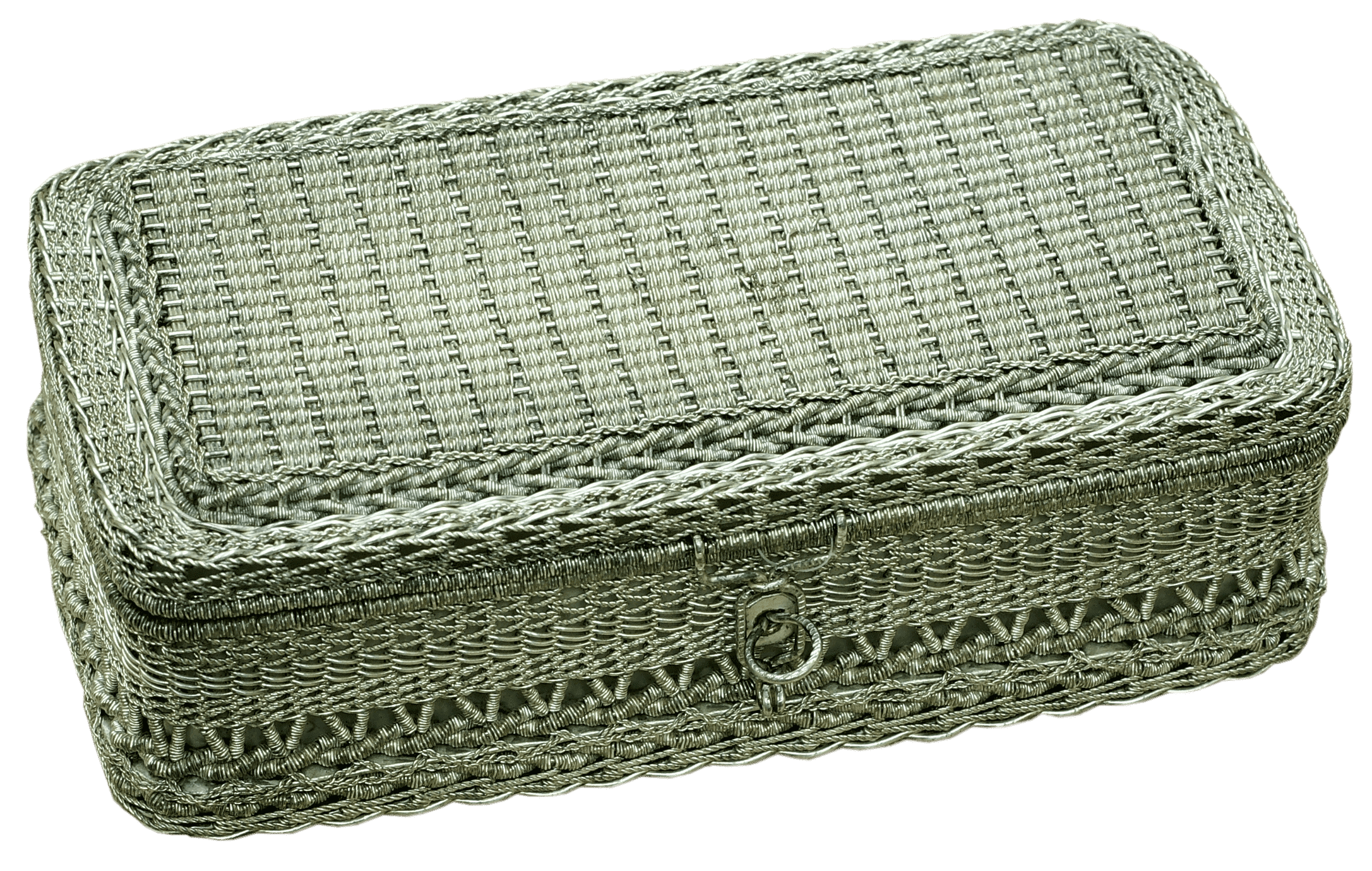
Filigree box of Czechoslovak-Soviet friendship
 Czechoslovakia ,
1954
Czechoslovakia ,
1954
Filigree box of Czechoslovak-Soviet friendship
Filigree box. A note to the box in Czech [translation]: "To the city council of Stalingrad during the month of Czechoslovak-Soviet friendship. Made by “Svetom” society, Veľké Rovné, Bytča region, Czechoslovakia, November 1954."