
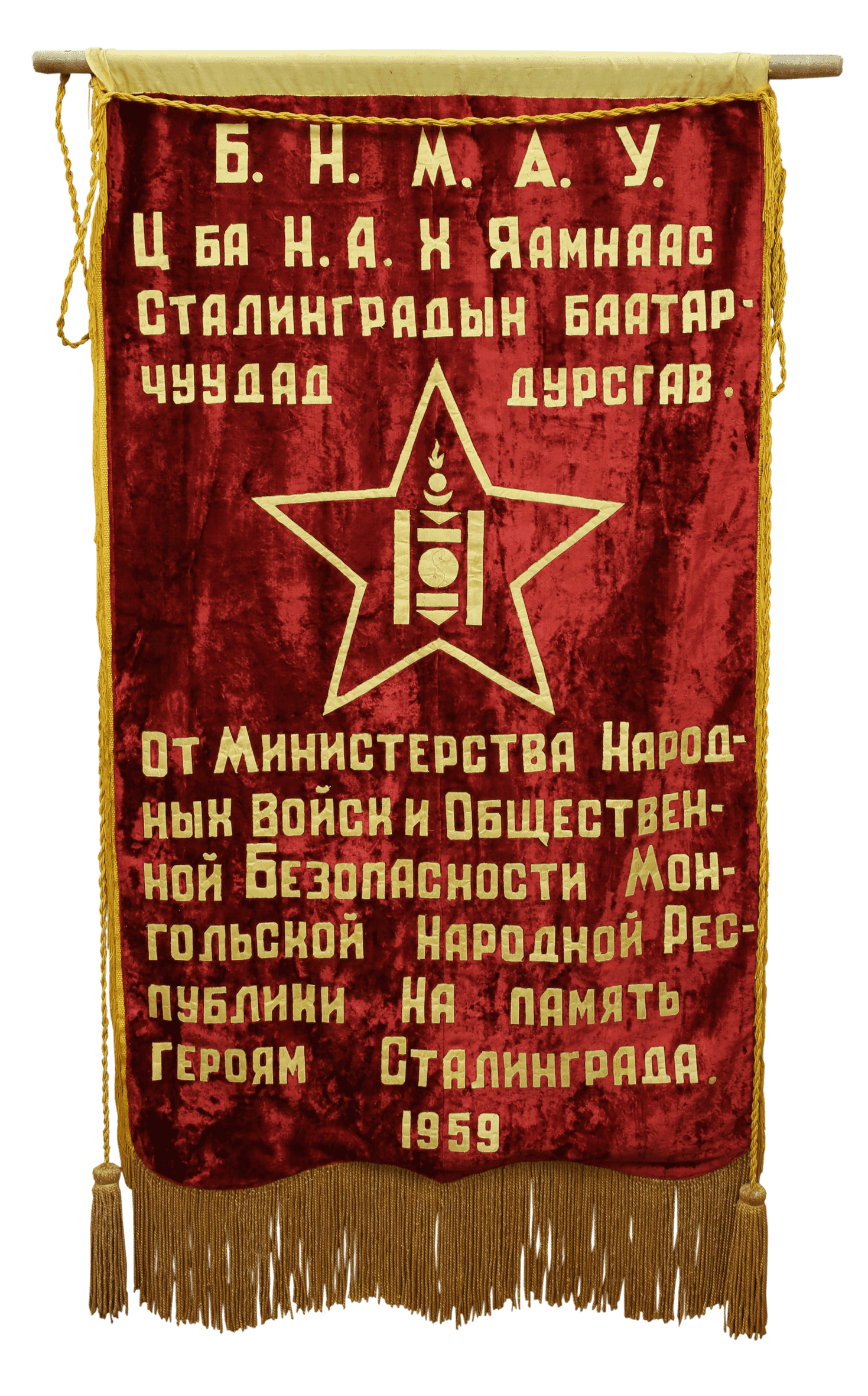
The front side of red plush with applique fabric patterns; back side of blue satin; fringes and twines on the edges; the twine ends with a brush [in the middle – the emblem of the armed forces of the Mongolian People’s Republic (Bügd Nairamdakh Mongol Ard Uls, BNMAU); the inscription above the emblem is in the Mongolian language, the one below the emblem is in the Russian language, both inscriptions read: “From the Ministry of National Defense and Security of the Mongolian People’s Republic to the Heroes of Stalingrad. 1959”.
Pennant “From the Ministry of People’s Forces and Public Security of the Mongolian People’s Republic to the memory of the heroes of Stalingrad.”
 Mongolia ,
May 1959
Mongolia ,
May 1959
МЗСБ КП 7724/1
140 х 72 cm
fabric, cord, fringe, weaving, sewing
A gift from the delegation of the Ministry of Troops and Public Security of Mongolia, who visited Stalingrad in May 1959.
See also



Kumgan (a jar for water)
 India ,
1963
India ,
1963
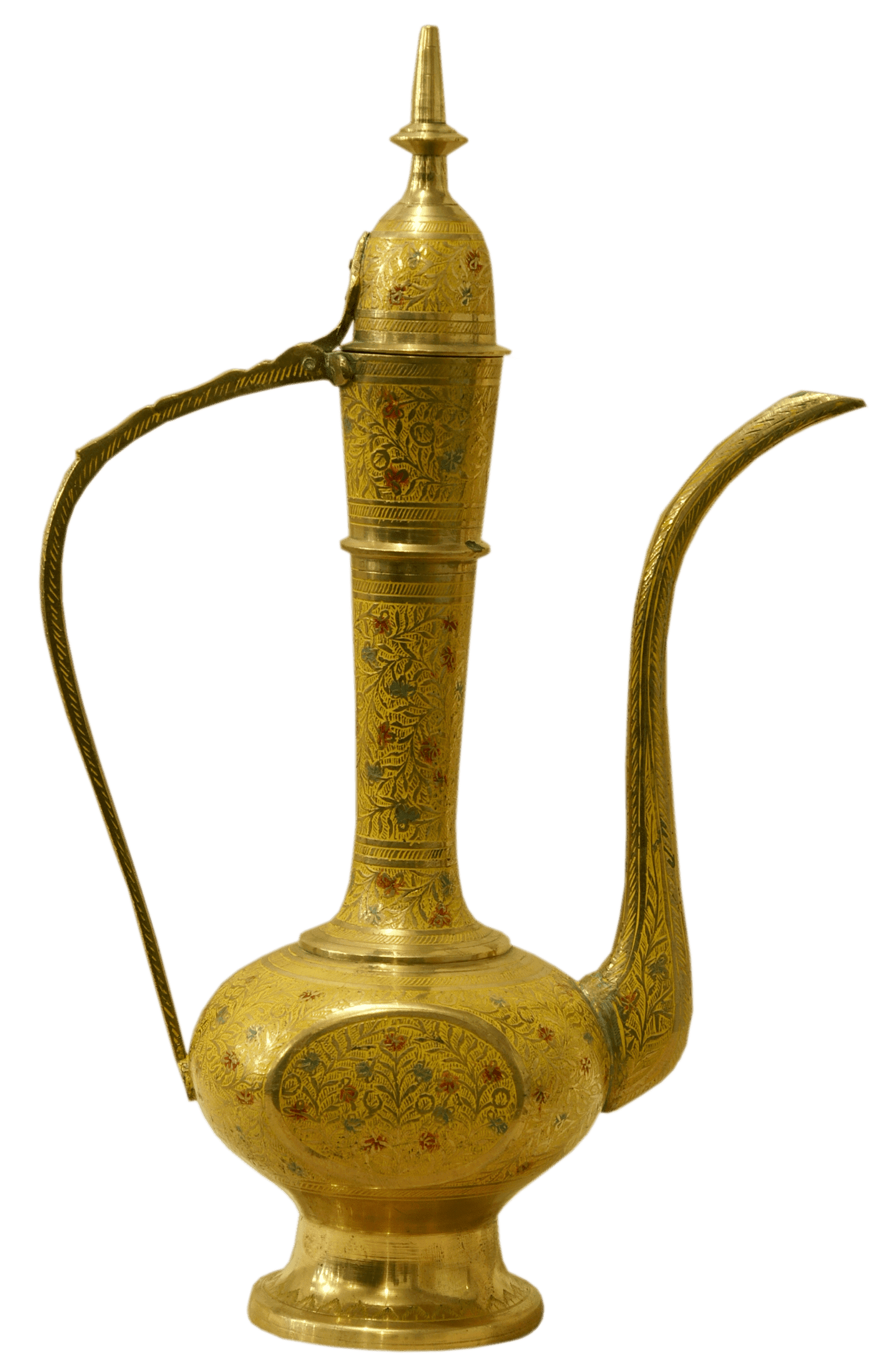
Kumgan (a jar for water)
A gift from the sports delegation from India. It is made of yellow metal and is shaped as a narrow-necked jug with a long spout, a shaped handle and a high lid ending in a sharp spire; the lid is fixed to the handle; the body is round and has two flattened sides. The surface of the jug is decorated with red and blue small flowers and yellow twigs.
Pennant “From the Ministry of People’s Forces and Public Security of the Mongolian People’s Republic to the memory of the heroes of Stalingrad.”
Mongolia ,
May 1959
Pennant “From the Ministry of People’s Forces and Public Security of the Mongolian People’s Republic to the memory of the heroes of Stalingrad.”
A gift from the delegation of the Ministry of Troops and Public Security of Mongolia, who visited Stalingrad in May 1959.