
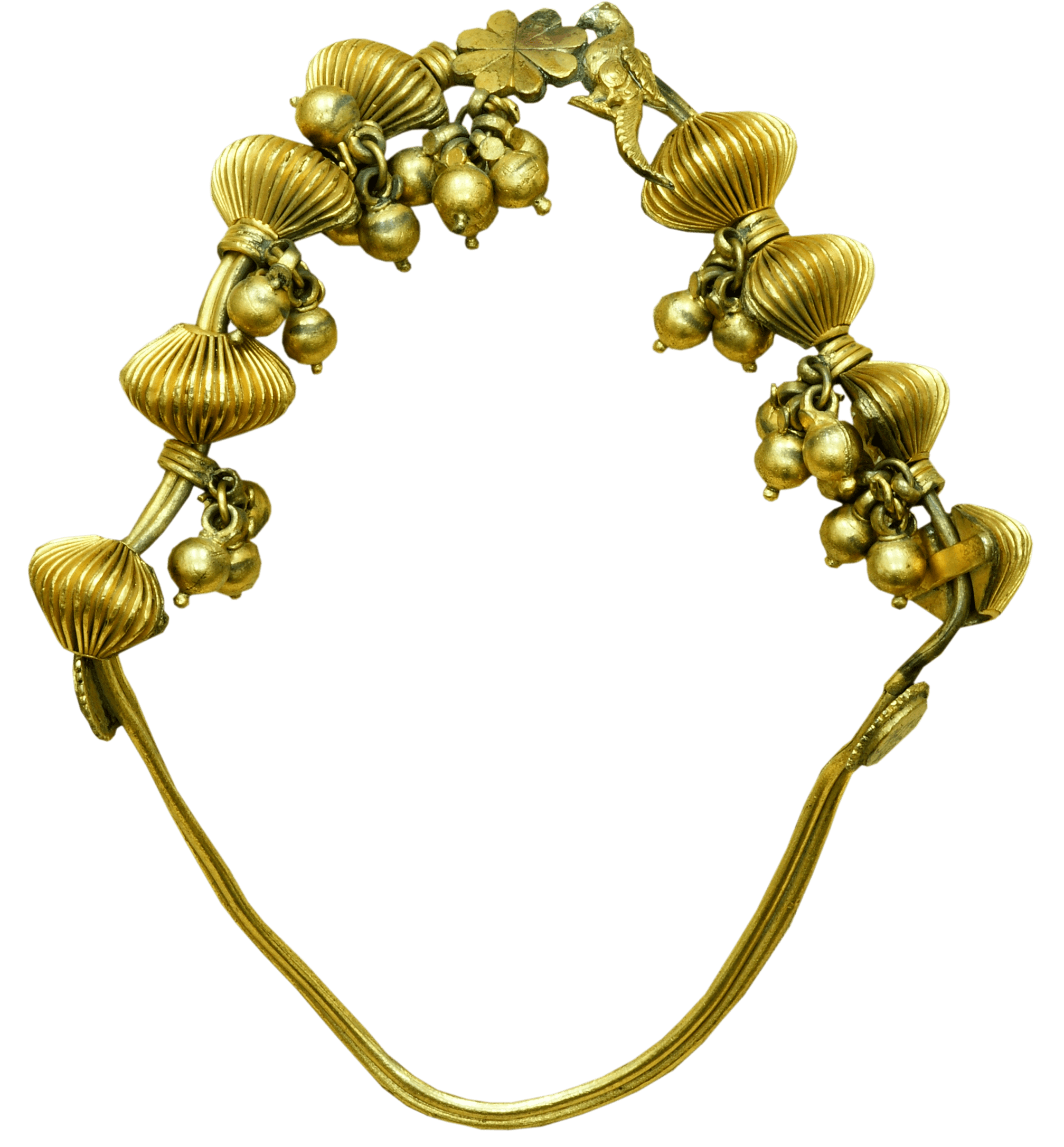
An anklet. The jewel has no lock and is made of two strands of metal wire, which are strung with eight decorative elements (charms), shaped like bulbs, separated with little bells that jingle as a woman moves. On both sides of the leg opening there is a flower and a peacock. It is mostly used for performing rituals and as an indicator of the social class of the wearer.
Anklet (payal) – jewelry to be worn on the ankle
 India ,
1947
India ,
1947
МЗСБ КП 3429 П 180
3,2 х 10 х 13 cm
brass, casting, bending, assembly
A gift from the All-India Student Federation to Stalingrad youth
See also
Non-fluffing carpet
 Romania ,
November 1952
Romania ,
November 1952
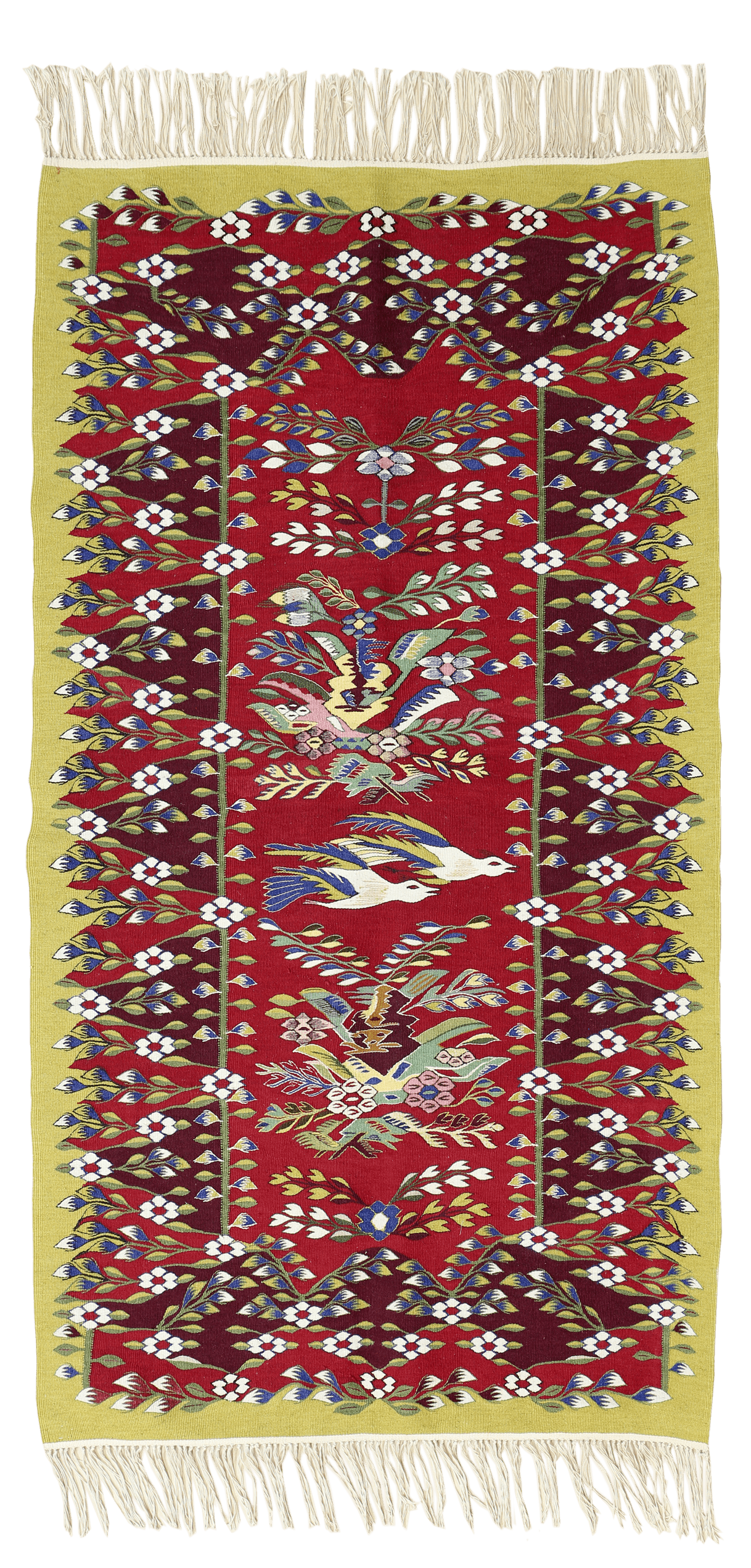
Non-fluffing carpet
A gift from the delegation of the General Confederation of Labor of Romania (Confederația generală a muncii) that visited Stalingrad in November 1952. Two birds are flying close together against a background with floral ornaments.


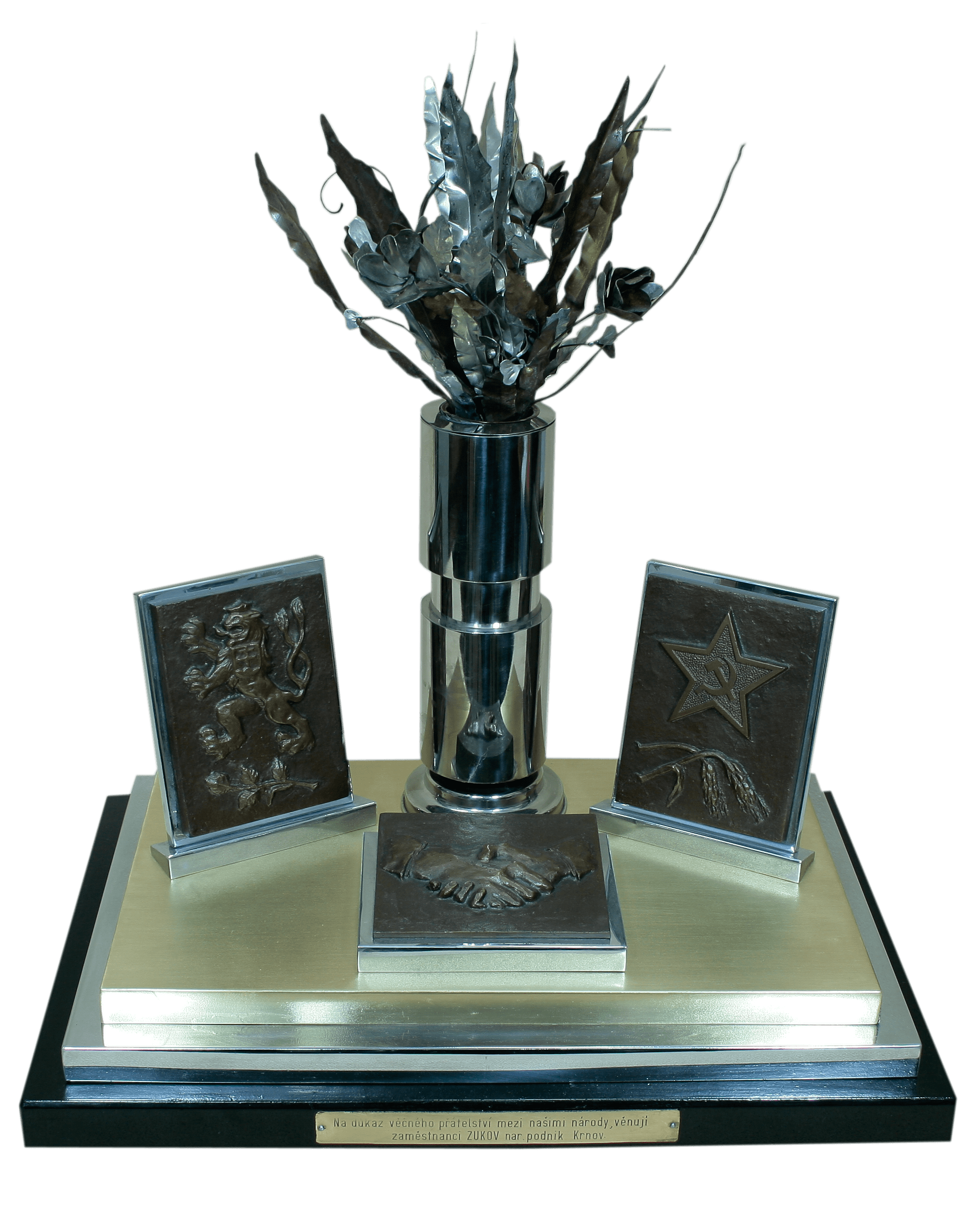

Earth from the place where the fighters of the Resistance movement were executed (in a vase with a lid)
 Italy ,
March 1964
Italy ,
March 1964
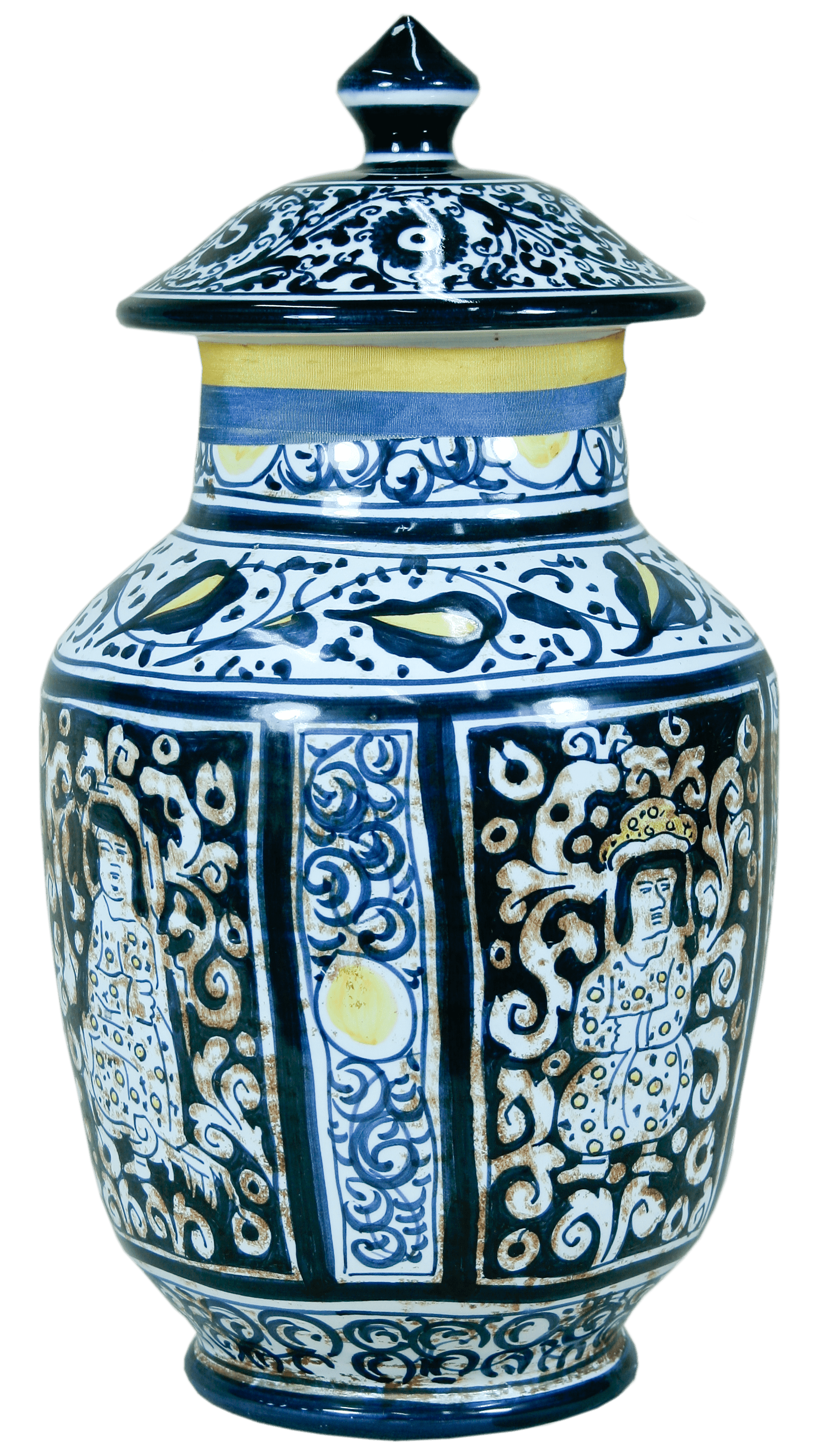
Earth from the place where the fighters of the Resistance movement were executed (in a vase with a lid)
A gift from the Turin mayor’s office to the Volgograd delegation during a visit to Turin, Piedmont region, Turin