
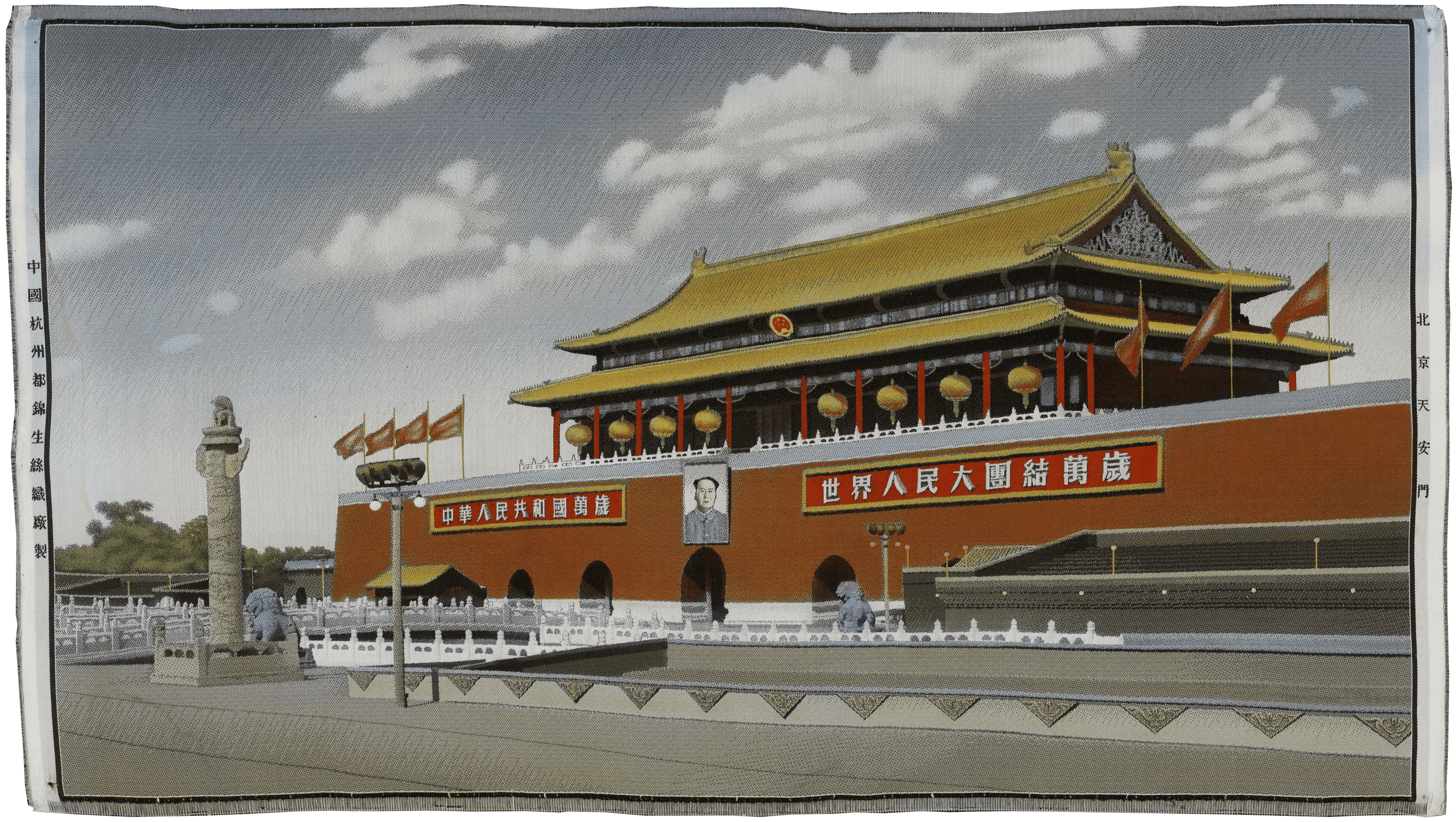
Tapestry depicting the entrance to the Forbidden City from Tiananmen Square in Beijing
 China ,
November 1955
China ,
November 1955
МЗСБ КП 5564
41 х 72,5 cm
silk, weaving
A present from the delegation of agricultural workers of the PRC who visited Stalingrad in November 1955. Tiananmen is named after the gate of the Forbidden city, namely the ‘Gate of Heavenly Peace’. It is a large red traditional Chinese building with upturned eaves on roof corners and five arched passages. The portrait of Mao Zedong is hung on the central part of the gate. The placard on the left of the portrait reads in hieroglyphs: [translation] “Long Live the People's Republic of China”, while the right one reads: “Long Live the Great Unity of the World's Peoples”. On October 1, 1949, at the Gates of Heavenly Peace, Mao Zedong proclaimed the creation of the People's Republic of China. The left and the right sides of the canvas are covered with hieroglyphs.
See also




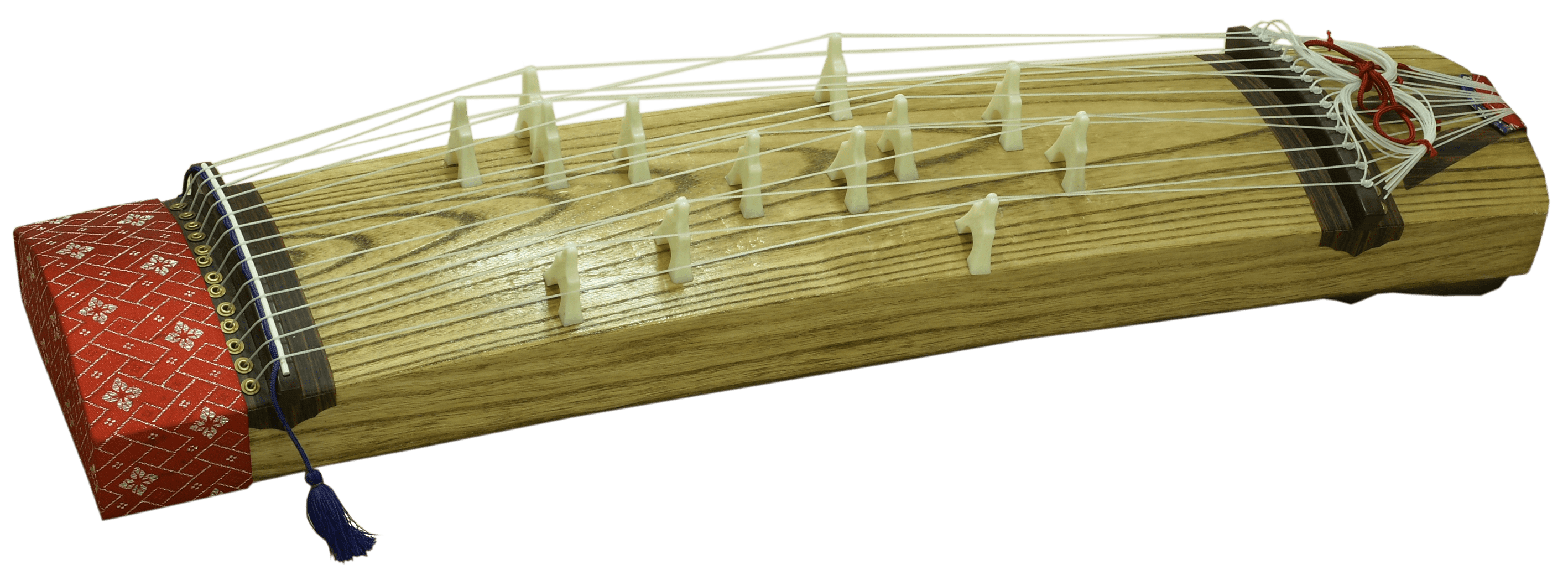
Koto, a Japanese plucked musical instrument
 Japan ,
1991
Japan ,
1991
Koto, a Japanese plucked musical instrument
Koto, a Japanese plucked musical instrument. Present from the Japanese delegation to the hero city of Volgograd, [before 1991]
Koto or Japanese zither is a plucked musical instrument, similar to the Russian gusli. It has long and slightly arched wooden body. Its thirteen strings are made from synthetic fiber. It is tuned based on the 6 traditional gagaku tonalities. Koto is sounded with plectrums.