
Poncho
 Argentina ,
June 1953
МЗСБ КП 4857
85 х 144 cm
fabric, fringe, weaving, embroidery
A gift from the delegation of Argentinean doctors who visited Stalingrad in June 1953. A peculiar coat made of two pieces of hand-made wool fabric sewed together with a head hole left. The neckline is decorated with embroidery in the centre of the front part as well as in the back. On the right and on the left the poncho is covered with decorative vertical brown stripes. The sides and the flaps have a fringe trim. The traditional outer garment of Aymara men, Mapuche and Quechua people, etc. is now worn by farmers and craftsmen of Latin America.

See also

Current Events in Namibia magazine No. 8. – Dar es Salaam, May 1976
 Namibia ,
09.08.1976
Current Events in Namibia magazine No. 8. – Dar es Salaam, May 1976
Present from the delegation of the South West Africa People's Organization (SWAPO) led by Sam Nujoma, the president of the organization, Tanzania, Dar es Salaam. 8 sheets with dedicatory inscriptions in a binder


A banknote of 10 drachmas dating back to 1955 issued with a dedicatory inscription: “Let a piece of Greece devoted to Stalingrad stay in this dear city.”
 Greece ,
12.12.1958
A banknote of 10 drachmas dating back to 1955 issued with a dedicatory inscription: “Let a piece of Greece devoted to Stalingrad stay in this dear city.”
A gift from K. Pomonas, a Greek tourist. Byzantine temple; on the back there is a portrait of the King George II of Greece (1890-1947), the first constitutional monarch of Greece. On the right there is a pen-written message that reads: “May a piece of a true-hearted Greece stay in the dearest Stalingrad / K. Pomonas”

Decorative plate
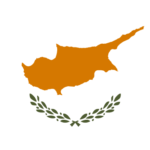 Cyprus ,
24.06.1963
Decorative plate
Present of the delegation of the Progressive Party of the Working People of Cyprus (AKΣL) to the Tsaritsyn - Stalingrad Museum of Defense. The plate is decorated with a schematic map of Cyprus and the ‘Cyprus – the island of Aphrodite’ wording written in English; the rim of the plate is covered with six images of the sights of the island; on the base of the plate there is a manufacture’s mark: three crowns inside a Laurel wreath. The plate can be hung on a wall.