
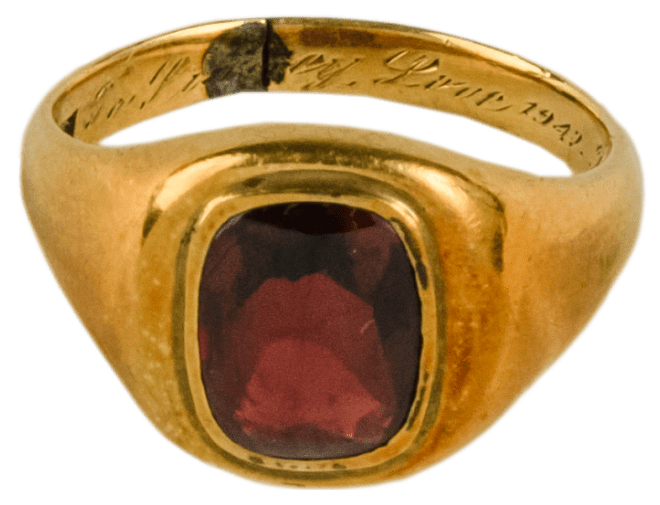
Ring. A gift to the people of Stalingrad from Sidney Kramer, a member of the American youth delegation
 USA ,
22.09.1951
USA ,
22.09.1951
МЗСБ КП 2541/1 З-2
23 х 21 х 14 mm
gold, stone, casting, cutting
A cast ring decorated with multiple facet cut almandine of an elongated obtuse-angled form; the hardly legible engraving inside the ring in the English language reads
[approximate translation]: “In token of love 1942”.
See also
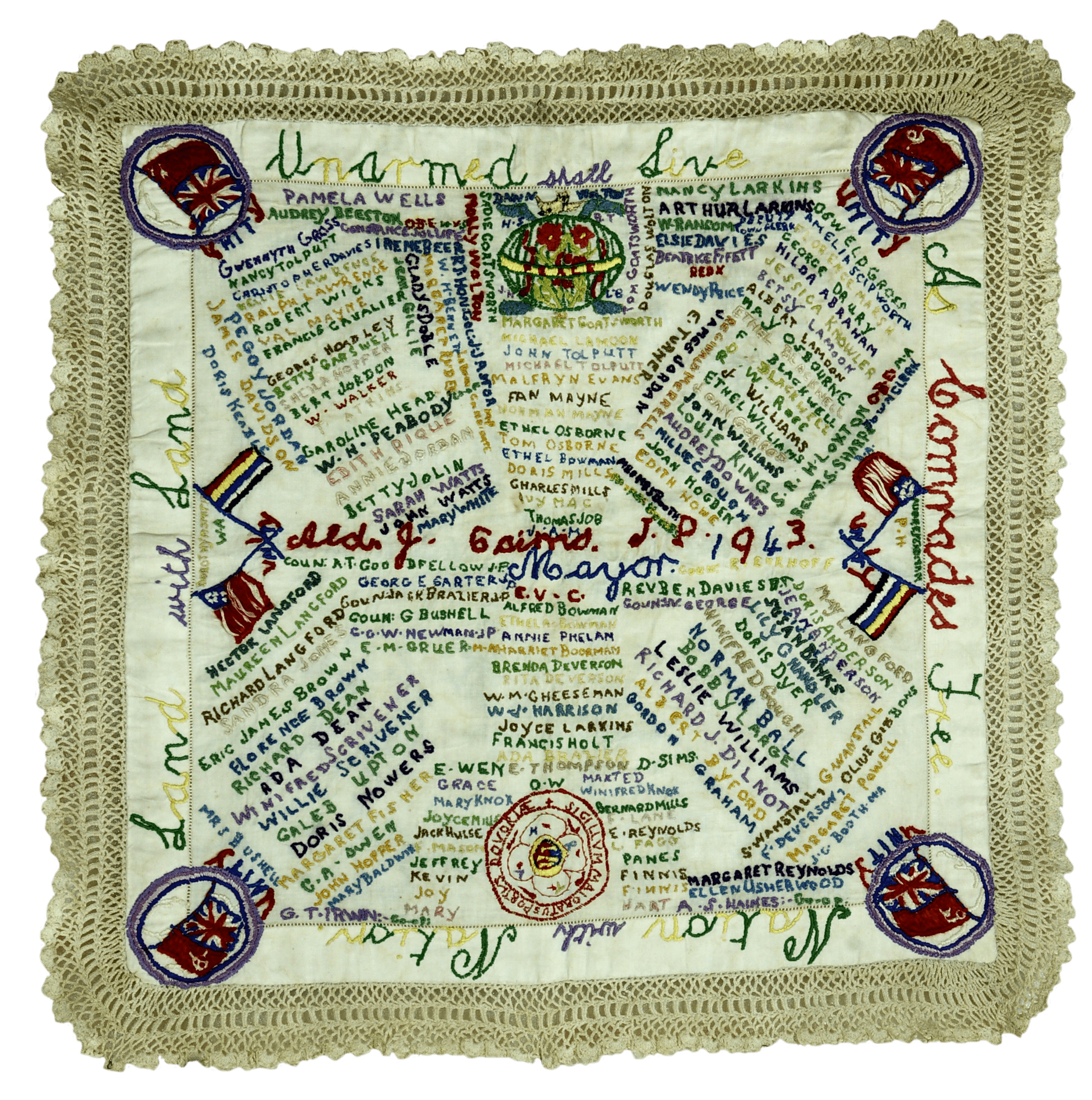
Double-sided napkin. . A gift from women of the English-Soviet Committee of Dover
 The United Kingdom ,
23.05.1944
The United Kingdom ,
23.05.1944
Double-sided napkin. . A gift from women of the English-Soviet Committee of Dover
A double-sided linen napkin. On one side there is an inscription in English that reads: “People with people, lands with lands will live freely together as comrades”. On the other side the inscription reads: “A token of friendship from Dover, the English front-city, to Stalingrad, the bastion of freedom and peace”. All the corners of the napkin are decorated with the USSR and the UK flags embroidered in circles. It is a crochet border napkin. Kent county, Dover


The Legion of Honor, badge of the cavalier
 France ,
23.06.1984
France ,
23.06.1984
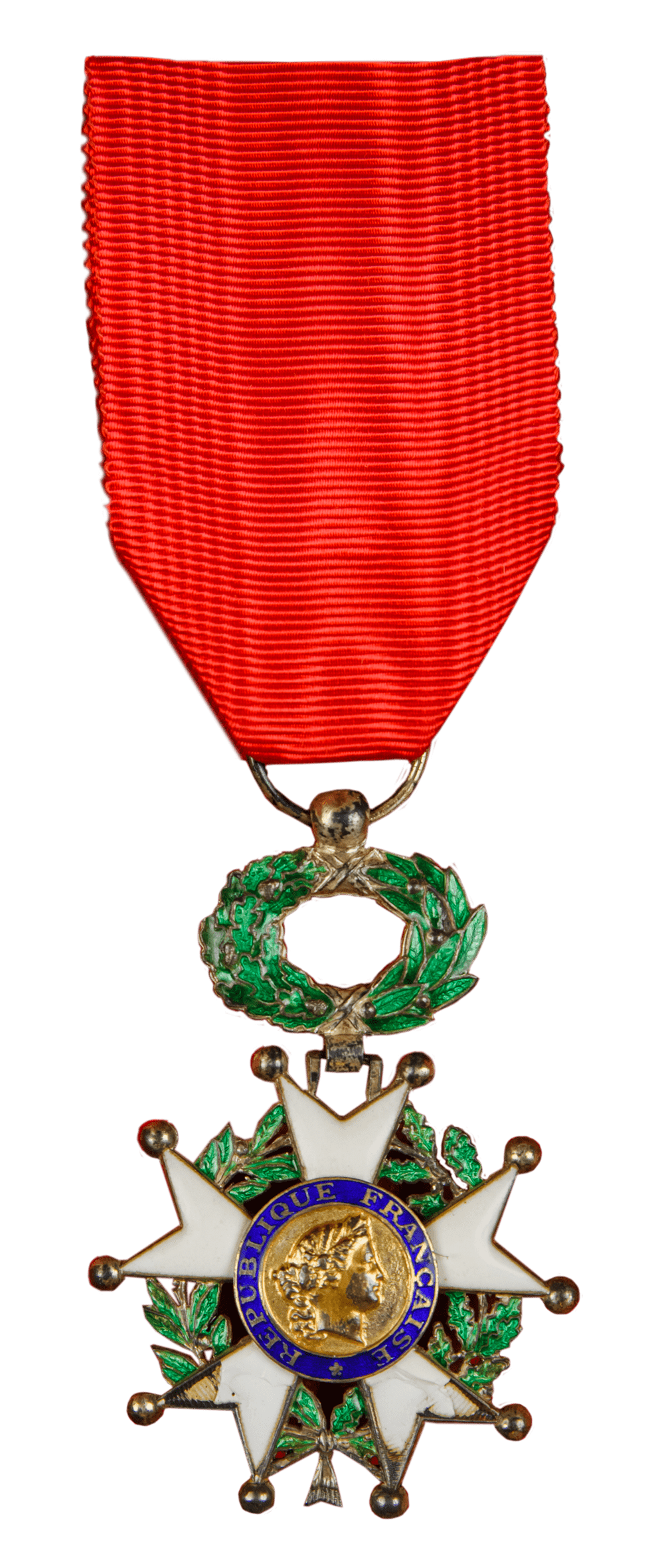
The Legion of Honor, badge of the cavalier
The Legion of Honor, badge of the cavalier (l'Ordre national de la Légion d'honneur, grade du chevalier). Award to the city of Volgograd. Presented by Francois Mitterrand, the President of France 23.06.1984
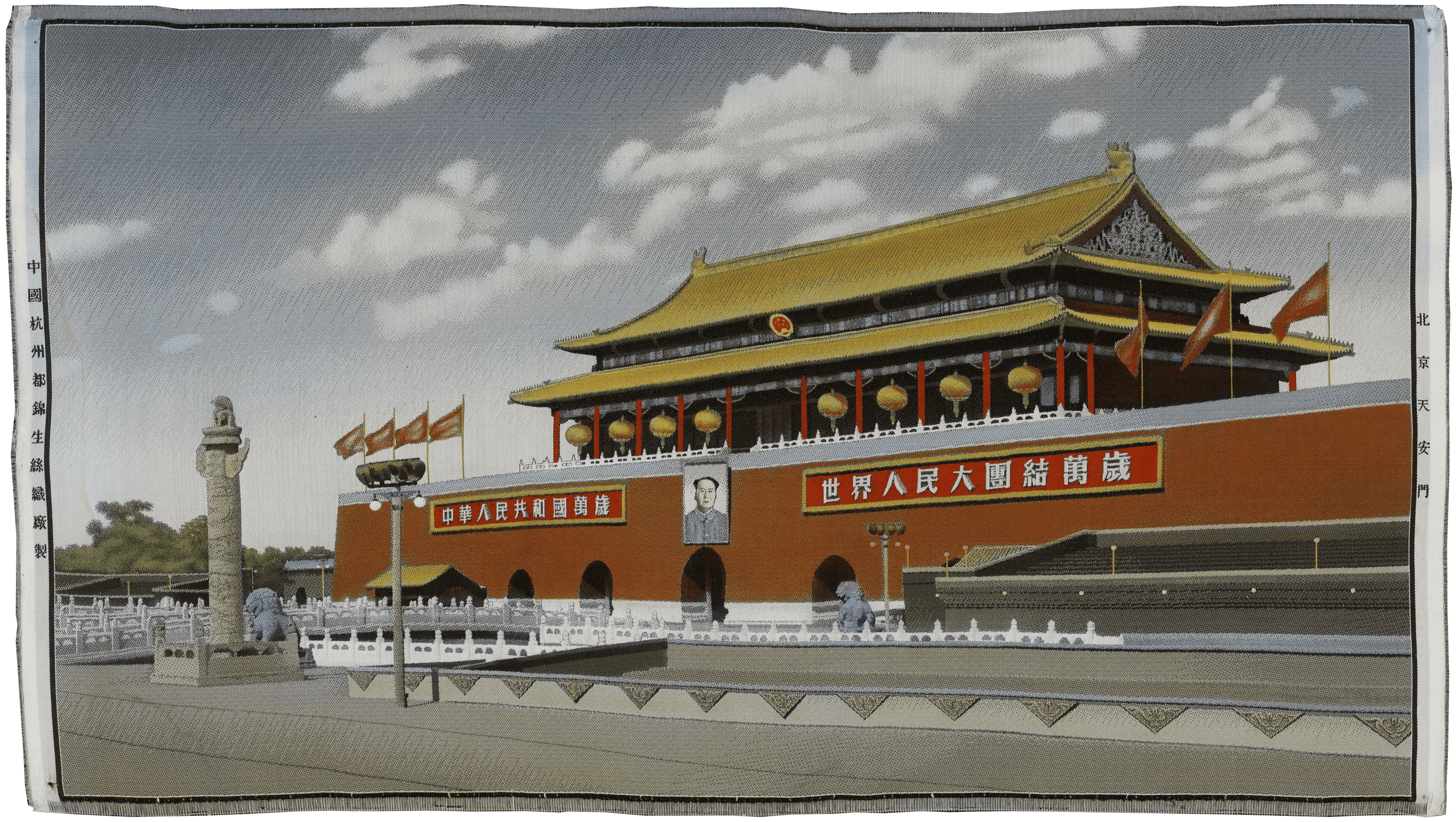
Tapestry depicting the entrance to the Forbidden City from Tiananmen Square in Beijing
 China ,
November 1955
China ,
November 1955
Tapestry depicting the entrance to the Forbidden City from Tiananmen Square in Beijing
A present from the delegation of agricultural workers of the PRC who visited Stalingrad in November 1955. Tiananmen is named after the gate of the Forbidden city, namely the ‘Gate of Heavenly Peace’. It is a large red traditional Chinese building with upturned eaves on roof corners and five arched passages. The portrait of Mao Zedong is hung on the central part of the gate. The placard on the left of the portrait reads in hieroglyphs: [translation] “Long Live the People's Republic of China”, while the right one reads: “Long Live the Great Unity of the World's Peoples”. On October 1, 1949, at the Gates of Heavenly Peace, Mao Zedong proclaimed the creation of the People's Republic of China. The left and the right sides of the canvas are covered with hieroglyphs.