
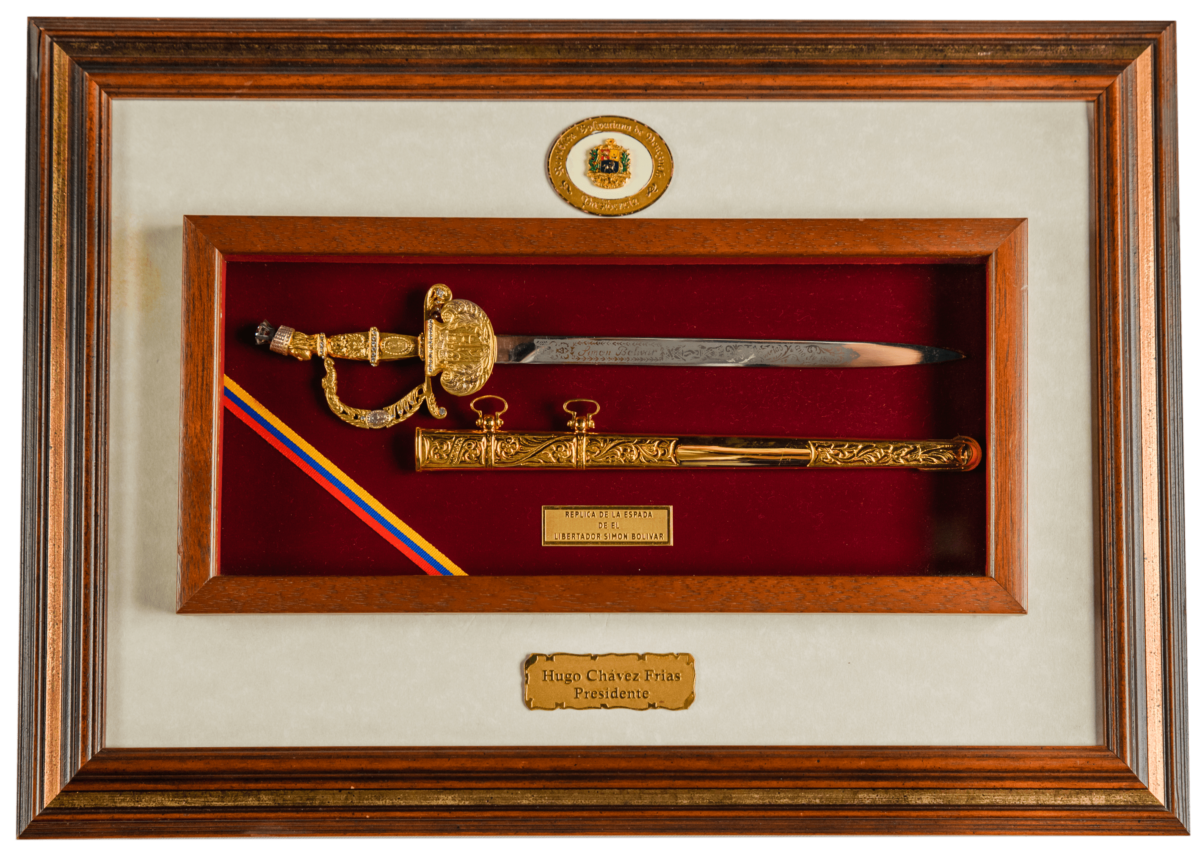
Simón José Antonio de la Santísima Trinidad Bolívar, 1783 – 1830, was the Liberator, who led the countries of Venezuela, Colombia, Peru, Ecuador and Bolivia to independence from the Spanish Empire. The original sword was given to Simón Bolívar by the people of Lima.
Souvenir copy of the sword of Simon Bolivar
 Venezuela ,
17.05.2001
МЗСБ КП 24867
31.7 x 45 x 4.2 cm; sword: 27.3 x 5.2; scabbard: 21.6 x 2.7 cm
metal, plastic, plexiglass, wood, velvet, molding, metal, plastic, plexiglass, wood, velvet, molding,
Souvenir copy of the sword of Simon Bolivar, the liberator of Venezuela, Colombia, Peru, Ecuador and Bolivia from Spanish colonialism. A gift from Venezuelan President Hugo Chávez to the residents of Volgograd, 05.17.2001, Bolivarian Republic of Venezuela
See also



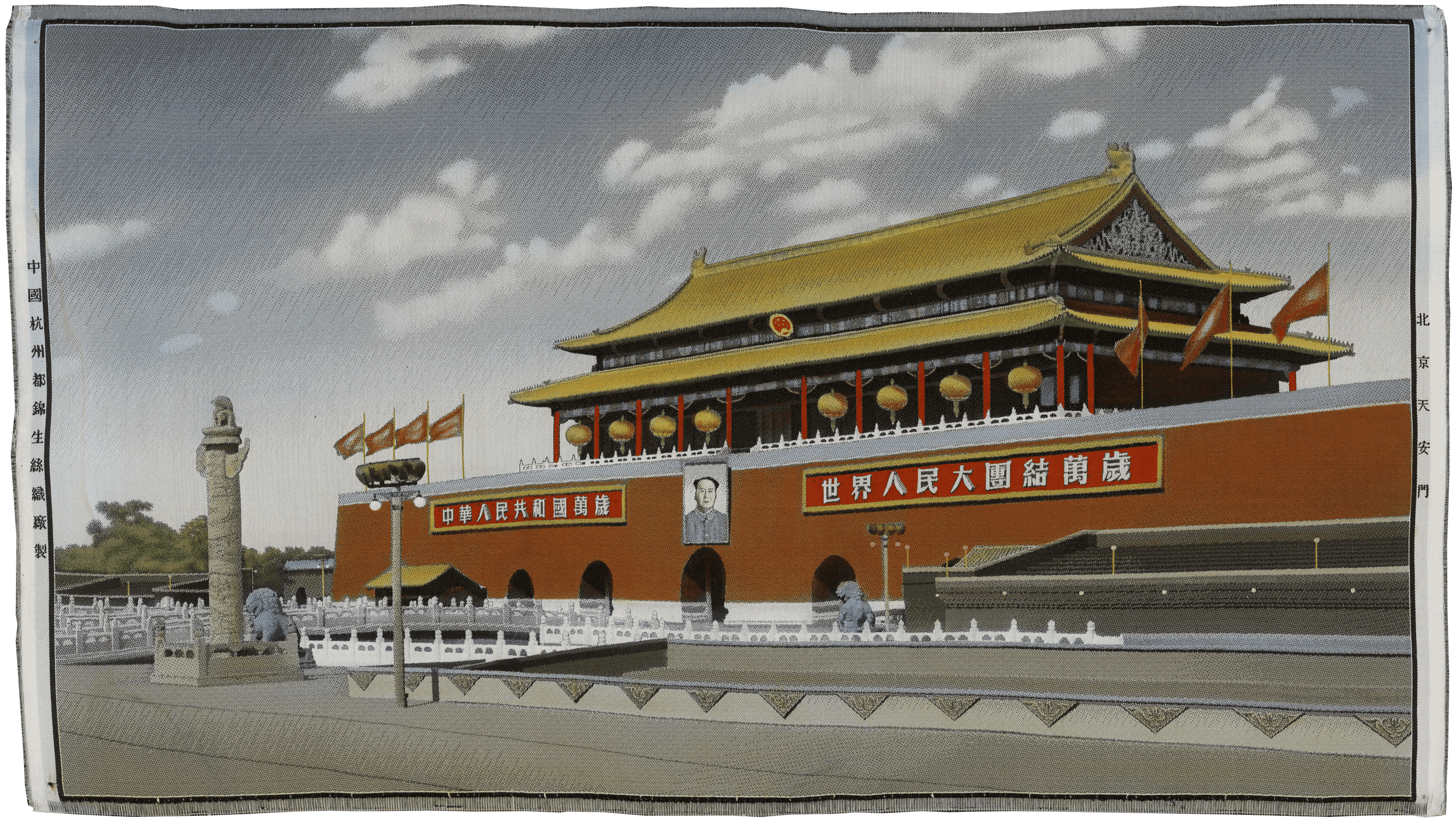
Tapestry depicting the entrance to the Forbidden City from Tiananmen Square in Beijing
 China ,
November 1955
Tapestry depicting the entrance to the Forbidden City from Tiananmen Square in Beijing
A present from the delegation of agricultural workers of the PRC who visited Stalingrad in November 1955. Tiananmen is named after the gate of the Forbidden city, namely the ‘Gate of Heavenly Peace’. It is a large red traditional Chinese building with upturned eaves on roof corners and five arched passages. The portrait of Mao Zedong is hung on the central part of the gate. The placard on the left of the portrait reads in hieroglyphs: [translation] “Long Live the People's Republic of China”, while the right one reads: “Long Live the Great Unity of the World's Peoples”. On October 1, 1949, at the Gates of Heavenly Peace, Mao Zedong proclaimed the creation of the People's Republic of China. The left and the right sides of the canvas are covered with hieroglyphs.